2D Animation, Stopmotion and Story boarding
2D Animation
Shapes showing emotion
Link to 2D animation embedded in image below
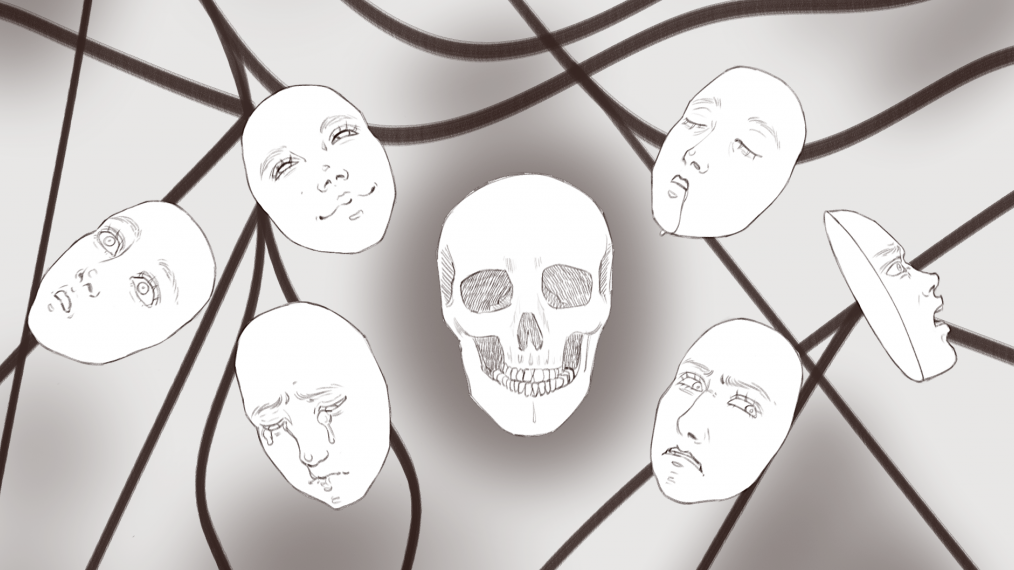
2D animation was my first rotation. The fundementals covered in this class were particularly base covering when it came to all future assignments. Going over the principles of motion and how they are used helped me pin-point what, in my own work, was resulting in a movement not looking natural or smooth. My two favourite principles I took from this rotation are arcs and anticipation; when animating, these for me tend to be the most important to keep an eye on.
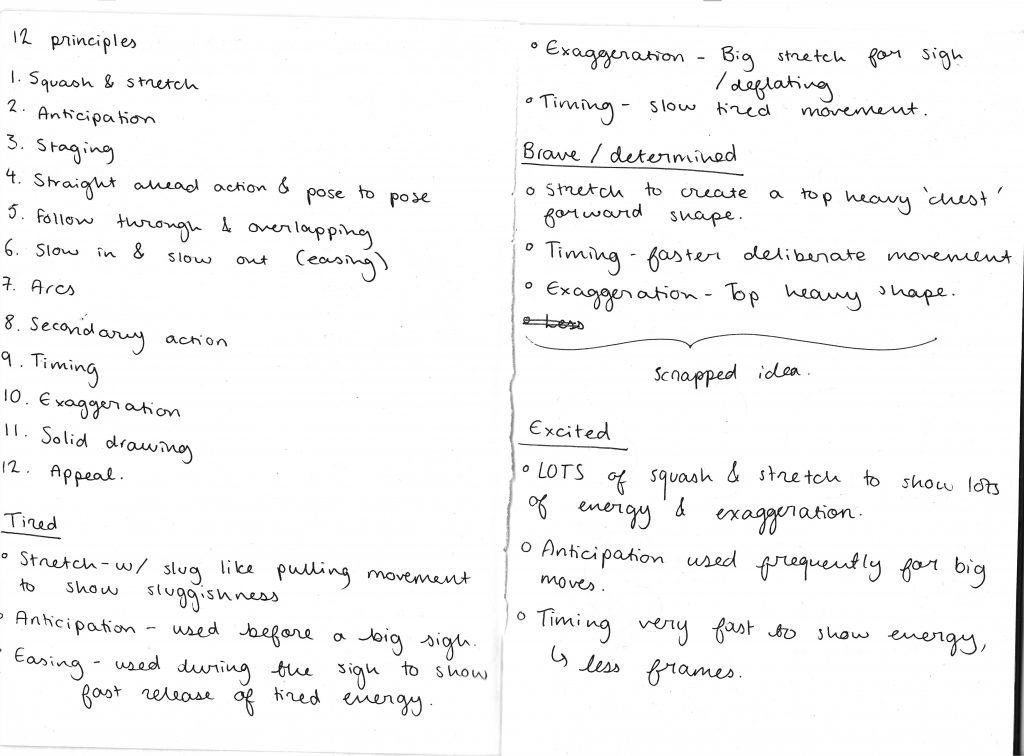
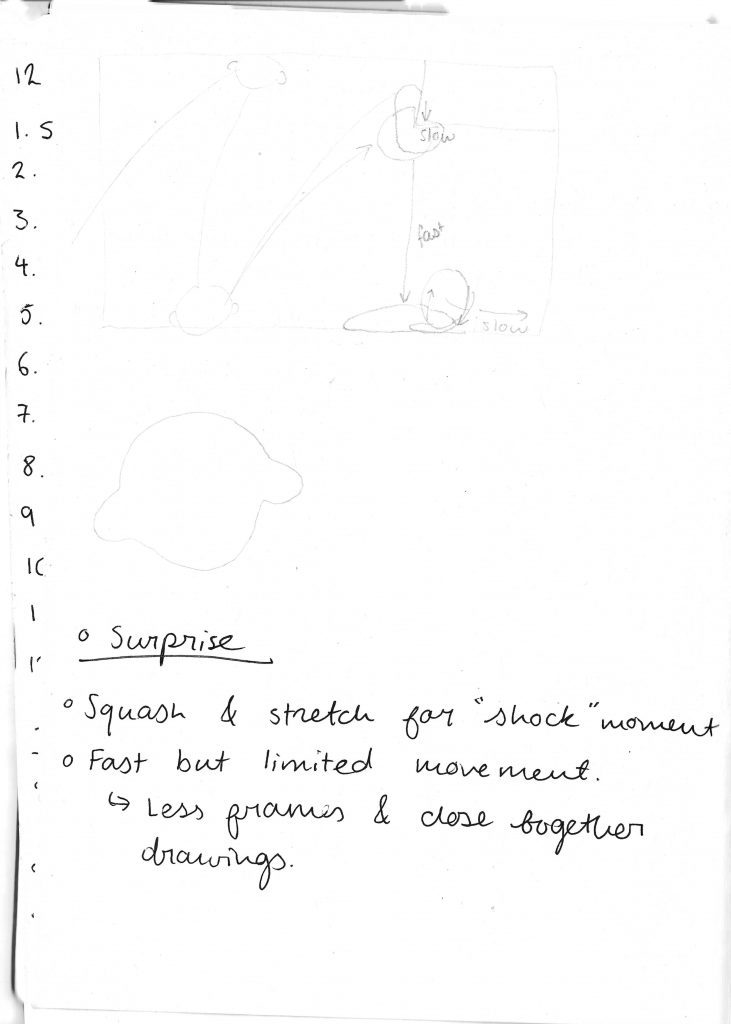
Before starting to animate, I took time to map out what principles I would use and how I would use them to illustrate different emotions in something inanimate. Using this, I decided on what emotions I wanted my character to convey; I decided on excitement, shock/pain and tiredness.
I then sketched out a small map of how my character was going to move before finally jumping into my animation.
Initially, my project consisted mainly of straight ahead animation. I found that with how my blob character was built and moved, I didn’t have to worry as much about having a very specific or consistent shape as long as I made sure to maintain the same volume. When I introduced my second more blocky character however, I did need to employ pose to pose. Since the block character had a set shape, I couldn’t risk losing or altering it’s figure using straight ahead animation.
I found using blender for 2D animation to be quite difficult, especially when it came to colouring; the colour creation system prolongued colouring as you have to save each colour in the right fill category before being able to use it. I found it jarring to use in comparison to many other automatic colour saving systems. That being said, I realise this is because blender is more tuned to 3D animation than 2D.
Stop motion
The versitility of materials
Link to stopmotion animation embedded in image below
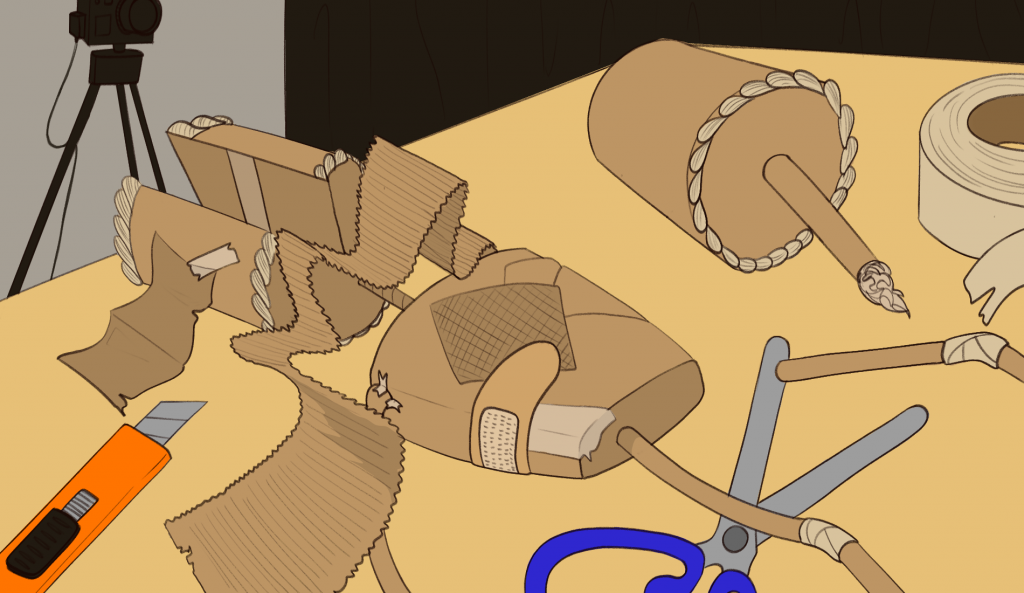
The stop motion rotation was my first experience with puppet making. Initially, I was intimidated, but quickly found manipulating materials to create a character based on my group’s aesthetic vision was expecetionally interesting; it was a form of creation that immediately blew life into our work.
To begin the rotation, my group decided to have a conversation about our aesthetic ideas for our character and decided on a theme; after some discussion, we settled on a creepy/cute aesthetic. To gain some inspiration, we created a shared pinterest board and started to share images of the vibe we were looking to create.
Following this, I created a sketch which my group agreed to be the basis of our character. We ended up swapping the plague doctor head for the cake since we wanted to use a slice from the cake as an eventual prop.
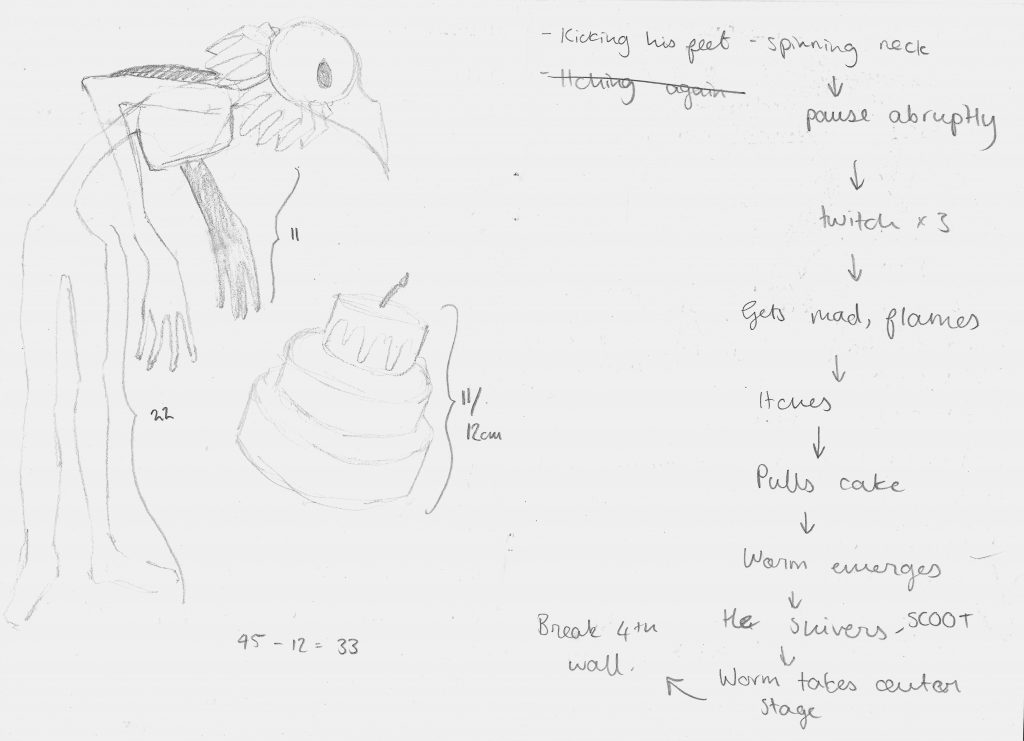
When it came to physically crafting the puppet, I created the body while my teammates focussed on the detailed head and the neck ruffle.
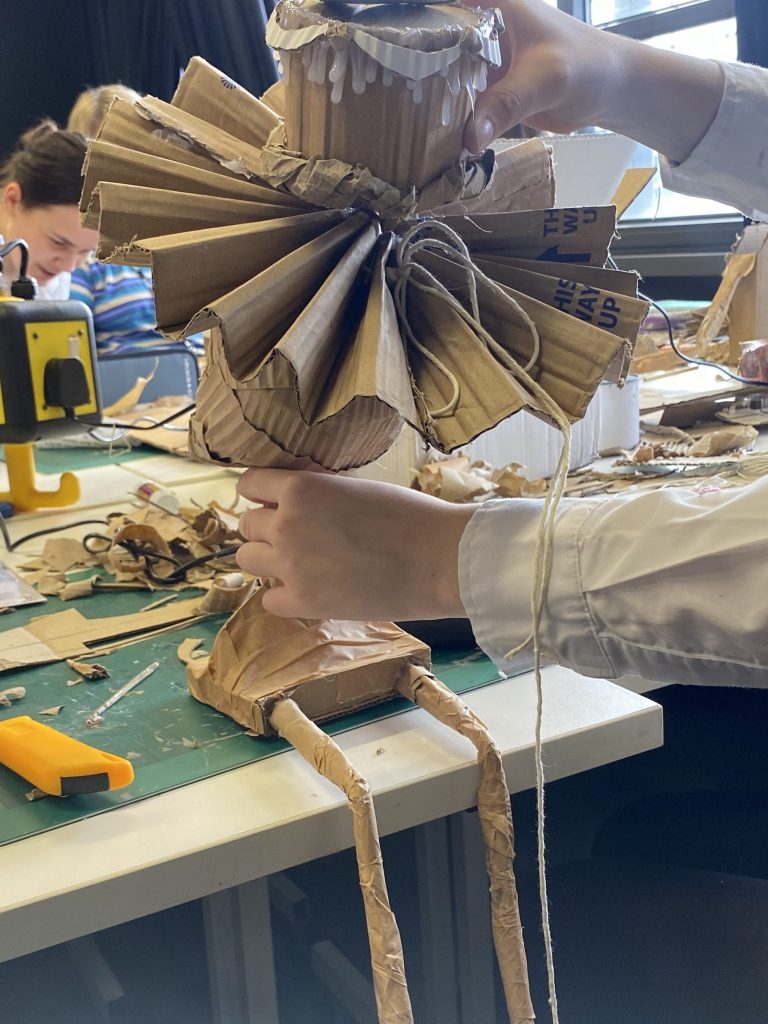
When working with Dragonframe, two of us were responsible for manipulating the doll, whilst one person took the frames. The person taking the shots had to make sure the frames were free of any hands or skin as well as making sure the puppet’s movements translated well.
We found the stopmotion process was incredibly time consuming especially considering we were working in a booth with a compromised backdrop. We spent a good amount of time each session taping off bright uncovered background elements that interferred with the shots .
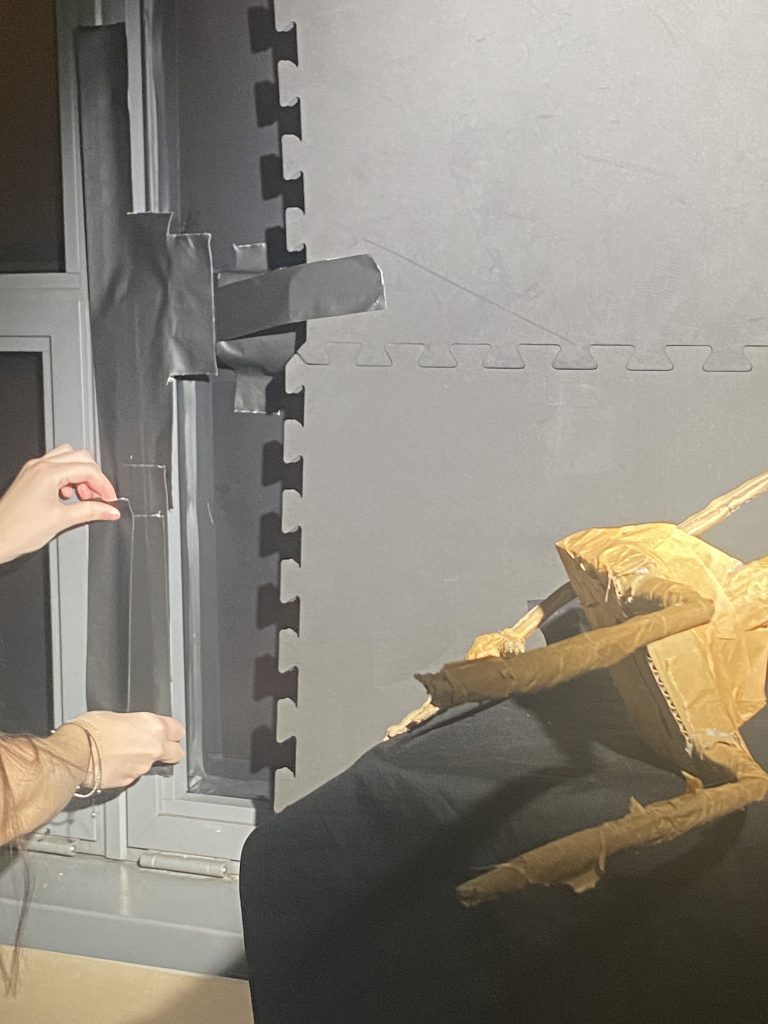
This was an expecptionally rewarding animated piece to create, not only because of its difficulty, but also because of how real the character feels after being physically created.
Story boarding
Storyboarding conflict
Link to storyboard animatic embedded in image below
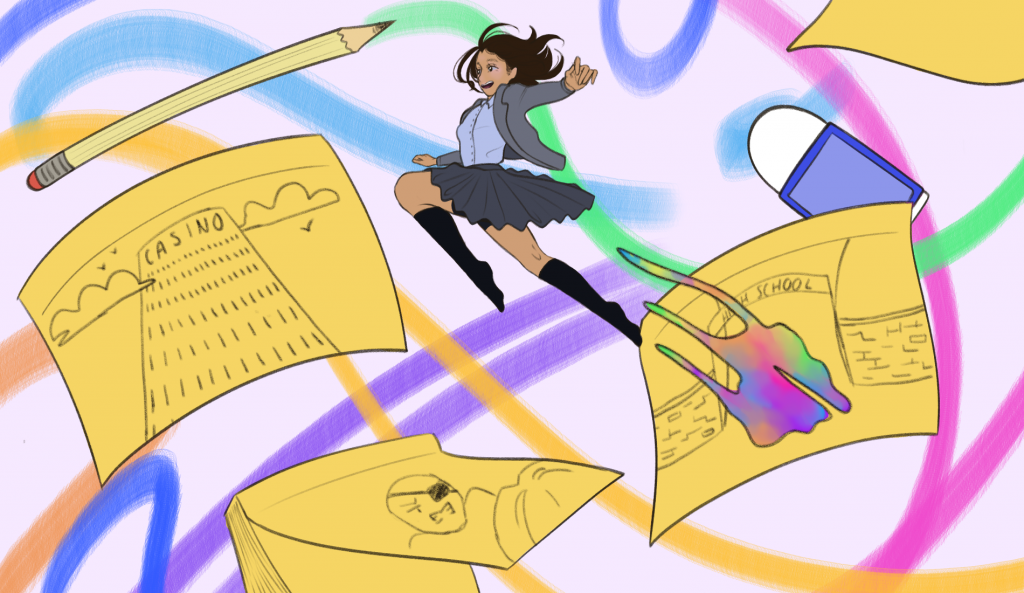
I found storyboarding was my most difficult rotation. I hadn’t created a full animatic with sound that had to fit into a set time before. It was exceptionally fun to come up with my own story; however, I found I had been too ambitious as my 30 second submission was stretched to over 2 minutes.
When deciding on a story I wanted to create something dynamic and silly. I decided on a high stakes game of rock, paper, scissors between a school girl and a mob boss type character. I stuck to using post-it notes to create each frame, ensuring I made space at the bottom of each post-it to include notes. I noted what was happening in the frame as well as if there was specific dialogue or sounds I wanted to add in when I got to the editing stage.
Post-its with notes
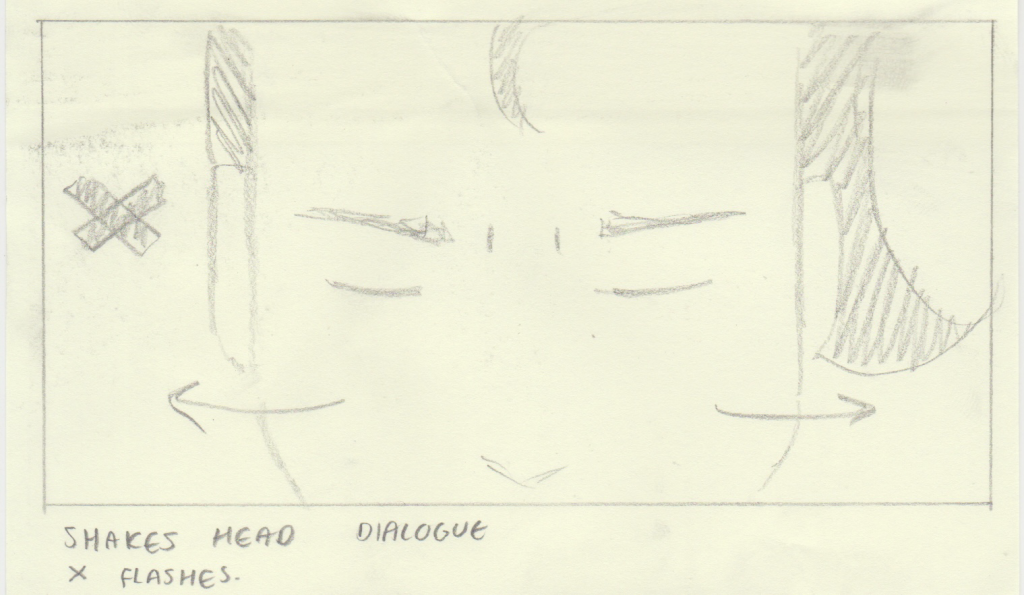
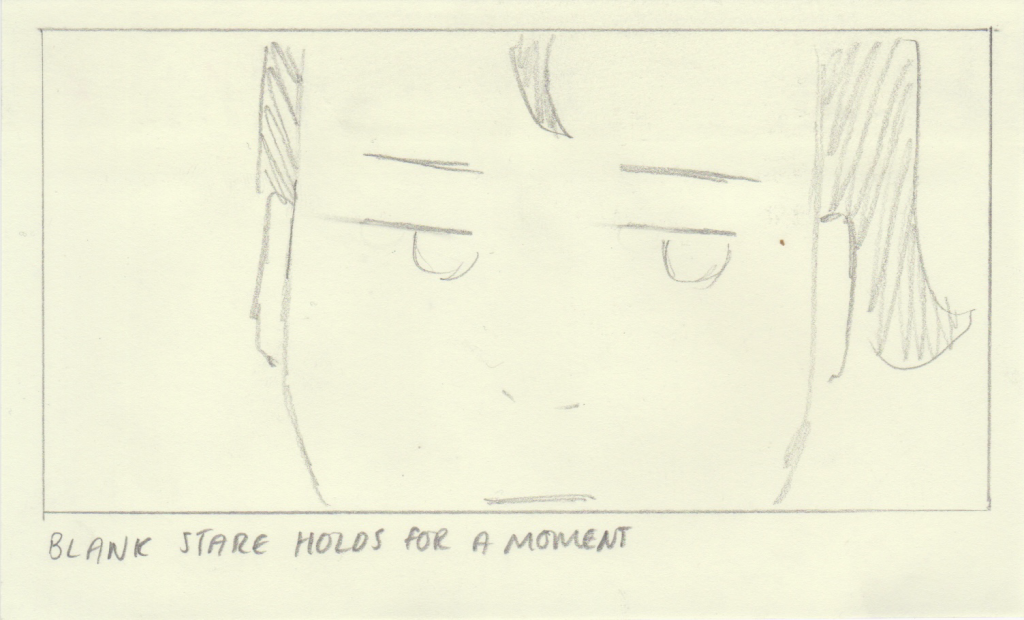
Surprisingly, I felt I had the most fun adding sound into my video; I felt it brought the story to life. I still see it’s potential as a fun short animation in the future.
Final thoughts
Overall I found these rotations incredibly helpful. The 2D animation rotation has helped me recognise issues or missing elements in my 2D work that might take away from the smoothness of an action. Stopmotion has exposed me to the magic of puppet making. Last, but not least, storyboarding has taught me a valuable lesson in sticking to assignment critera, as well as how to recognise the general number of frames a short animation can withstand.
Leave a Reply