Pre-production
To begin our pre-production process, my group and I first began by each doing personal brainstorms. After 15 minutes, we each came up with a rudimentary log-line for 5 different stories before we all joined back up to share our ideas. After discussing and picking aspects we liked from certain stories, we settled on 2 main plot lines to choose from: A beating heart found in a drawer after frantic searching around the house or a family dinner consisting of rotting food.
These initial ideas were very basic, in the sense that the flesh of the story hadn’t been considered yet, but this became a good diving board for what we would eventually produce. At this point we hade spoken with tutors who adviced us to consider many different questions pertaining to our plot; we had to think of why the heart? Why is it in the drawer? Will this translate to the audience? Does she have to be generically young?
We took this time to again collect even more ideas which began a cycle of idea creation and sharing as a group.
We eventually had asked ourseleves so many questions and consisdered so many varying story routes, that in order to accomodate the unfolding story, the plot had naturally began to shift; a story that started as a mystery thriller of finding a strange rhythmic sound, had eventually become a story of not only mystery but of sorrow and courage.
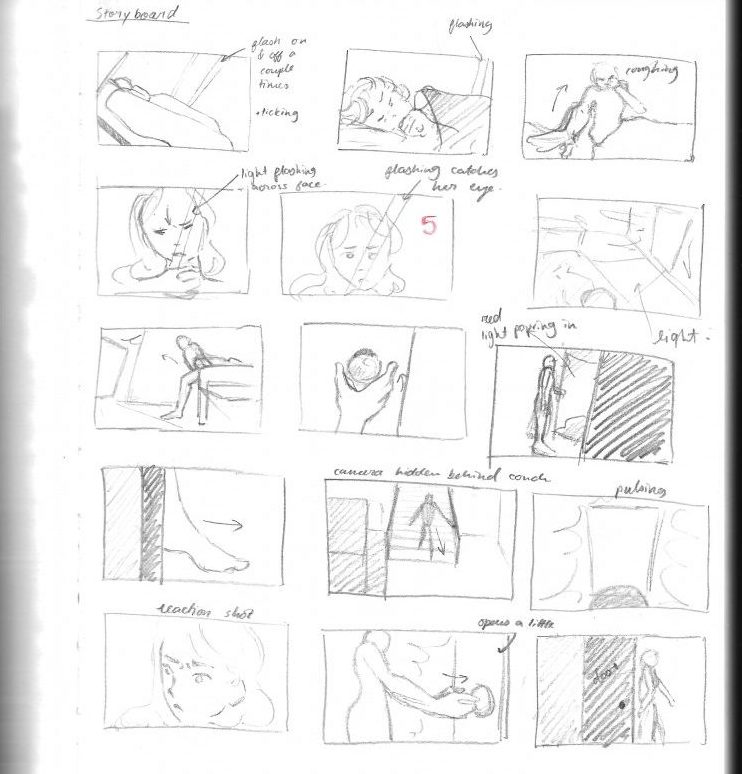
My inital storyboard
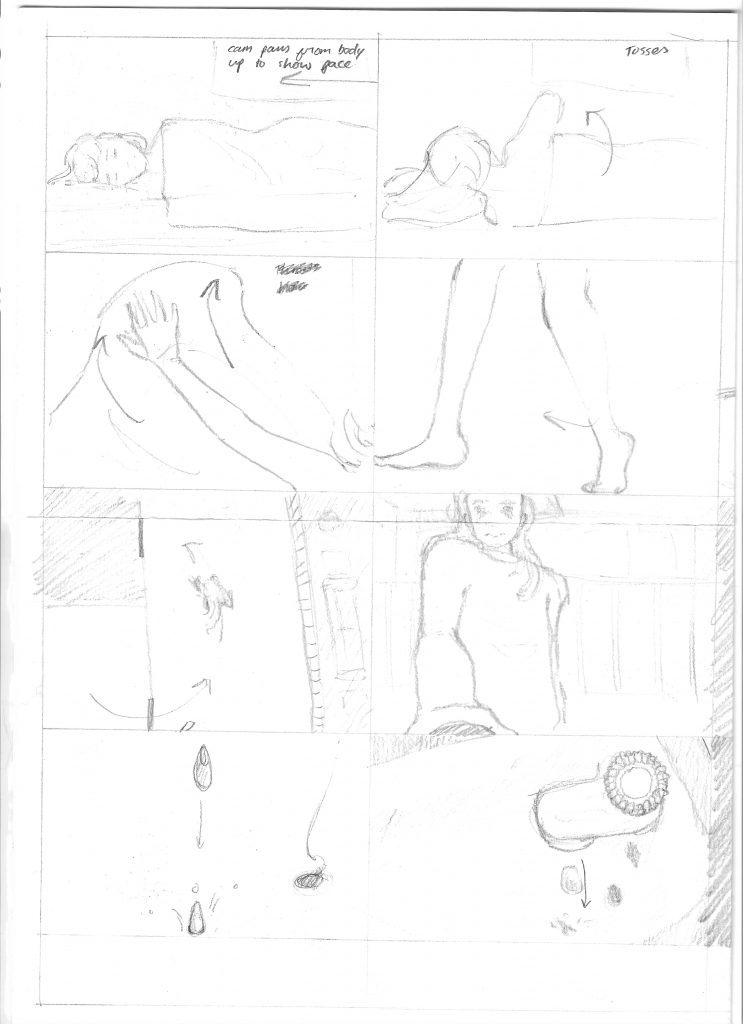
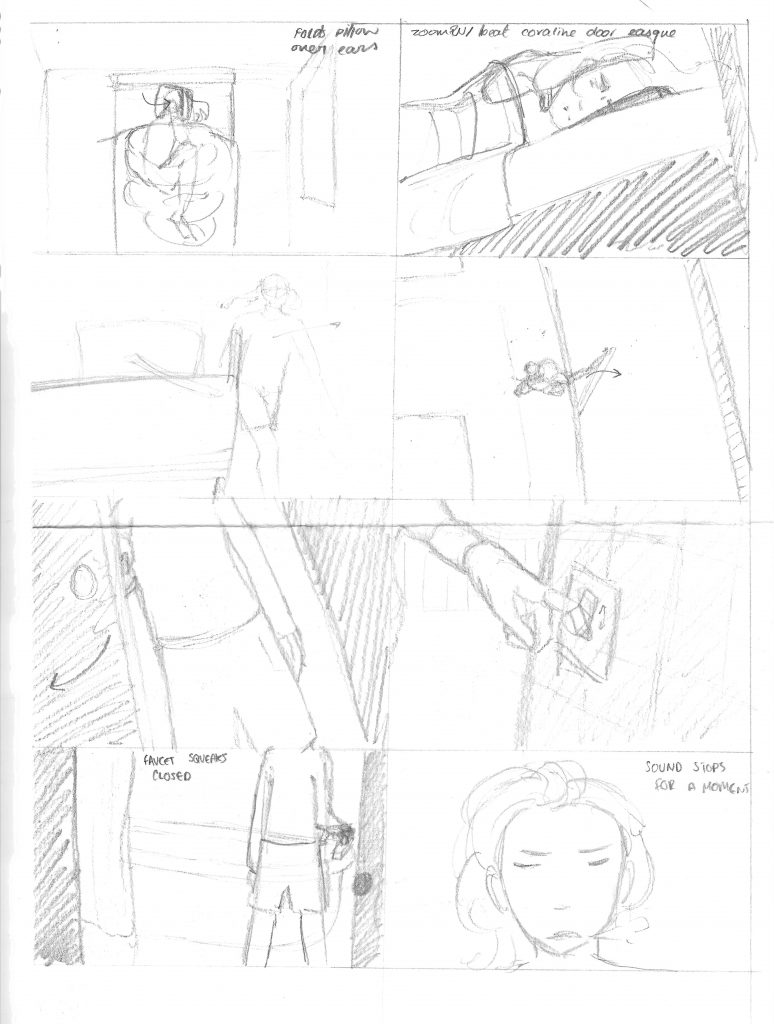
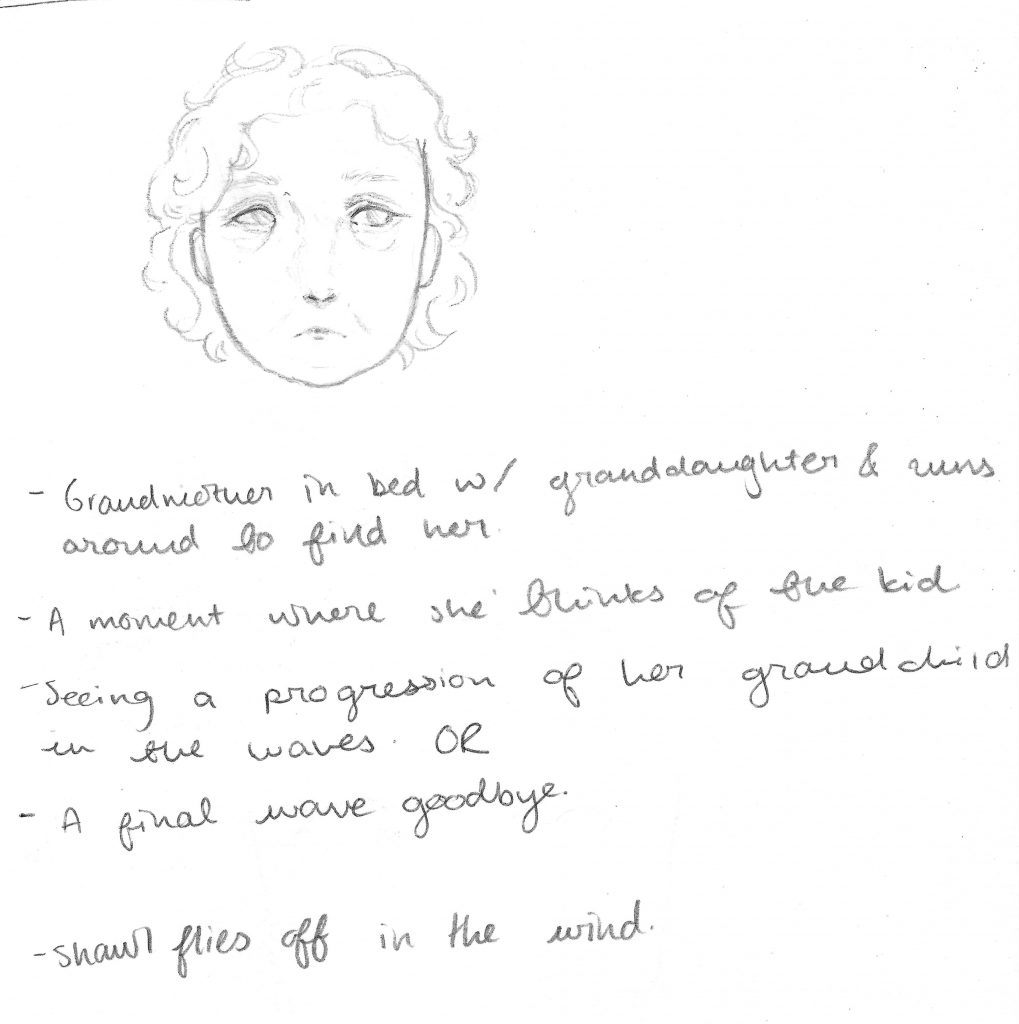
My revised storyboard plus character exploration
Animatic
Image below links to initial animatic
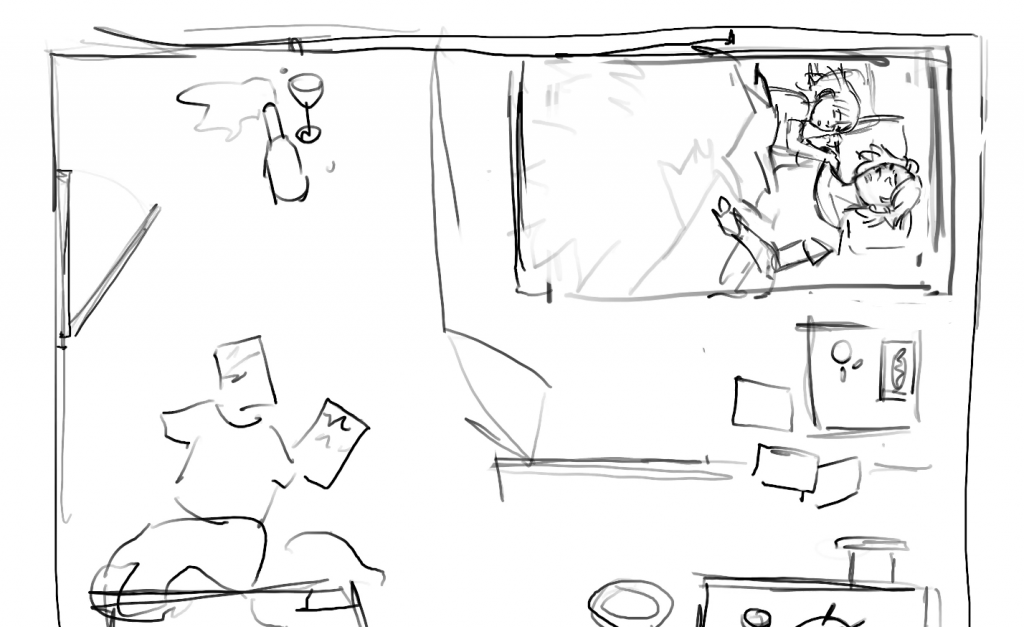
When creating our animatic, we each shared our individual storyboards (that had the same plot) and chose frames from everyone’s work to make a final collabrative storyboard. We then split these frames up equally and had everyone create their section of the animatic before splicing it all together.
The development phase did not end at the first animatic. We continued to work on the story, altering parts to accomodate pacing as well as readability. At one point, we collectively decided, following some tutor advice, we needed to change the ending. Initially, the ending followed our main character submissively following death across the river; however, multiple tutors felt this was not only unrealistic as a natural response to an untimely death, but also far too straightforward ‘like a ball rolling down a hill’.
We set back to work on figuring out how we could turn the continually negative story back into a positive, and decided on instead having our main character fight for a chance at life by wrestling death into the water for her coin.
Production
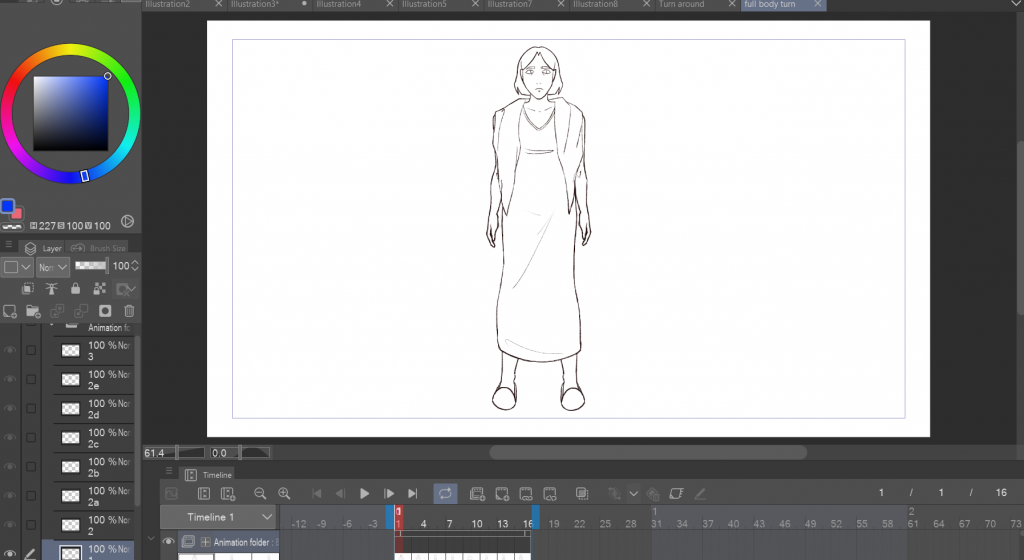
Once the production period started, our group attempted to cover basics that we would need when it came to fully animating; we wanted to agree on a style, create character turns, object designs and colour palettes.
After deciding and agreeing on a simple aesthetic similar to ‘Sundown’ (2020) with high contast colours similar to ‘Ice Merchants’ (2022), we began splitting tasks. I made a character design with a close up head turn and body turn. We decided to stick with the coin and boat design I had come up with in our animatic as well.
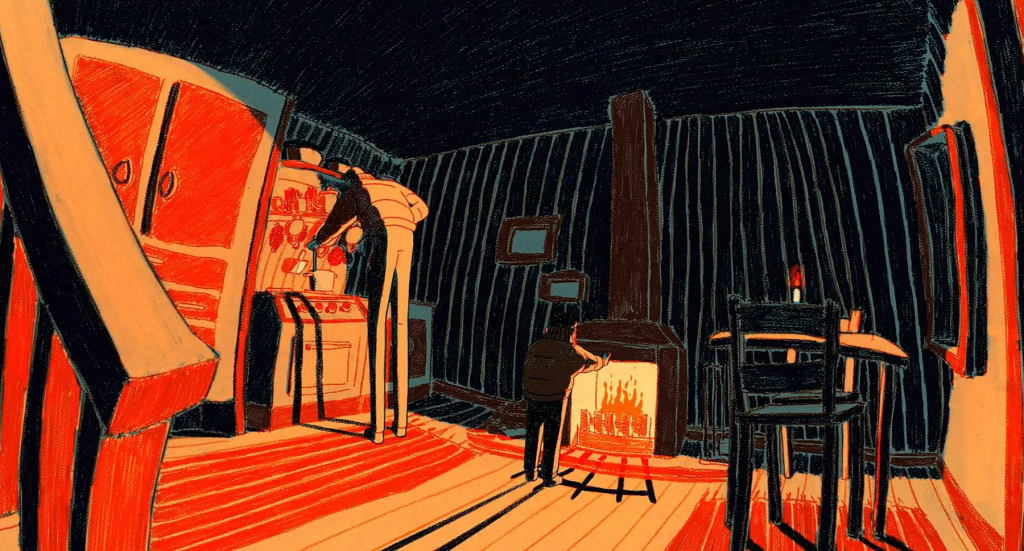
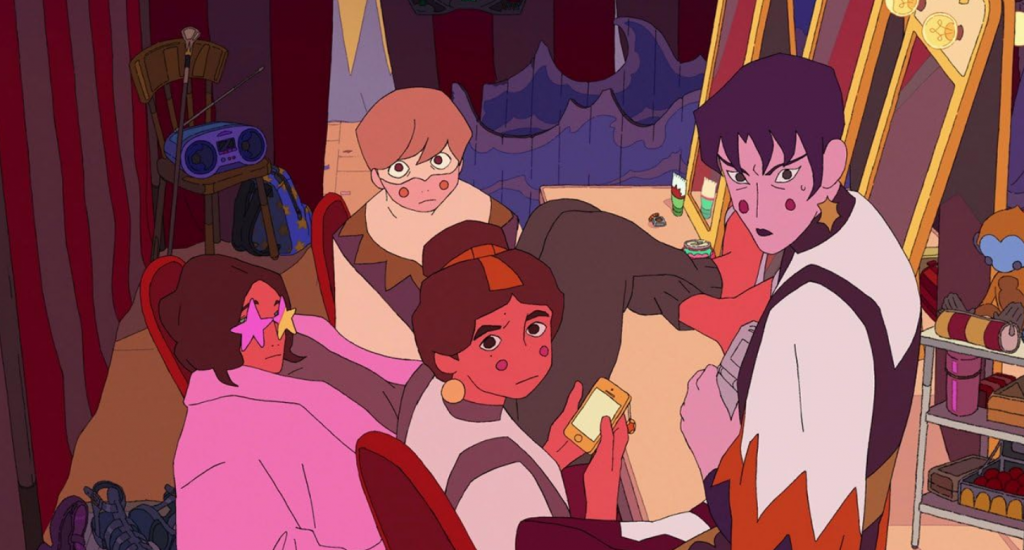
Image below contains link to head turn video
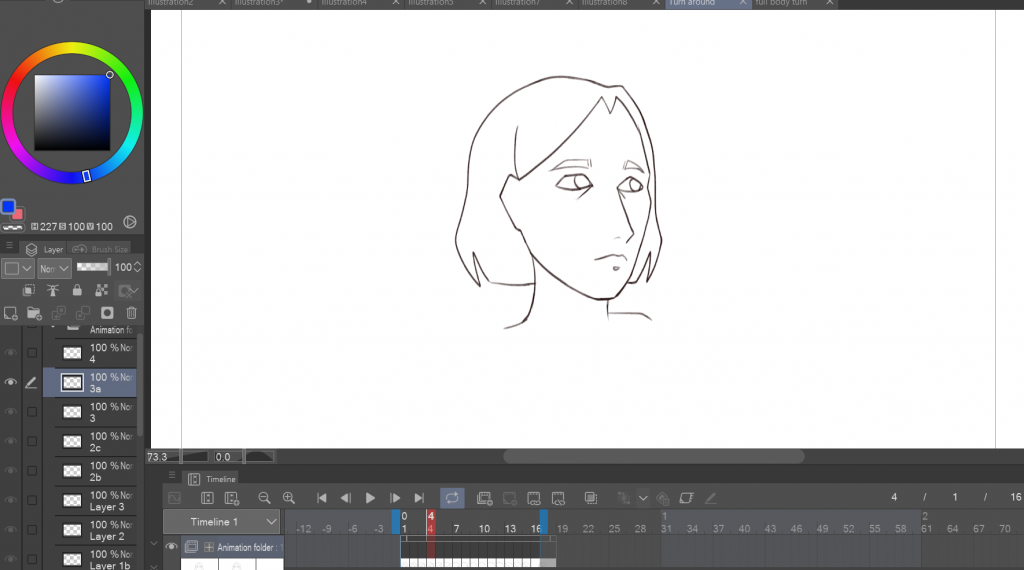
Image below contains link to full body turn video
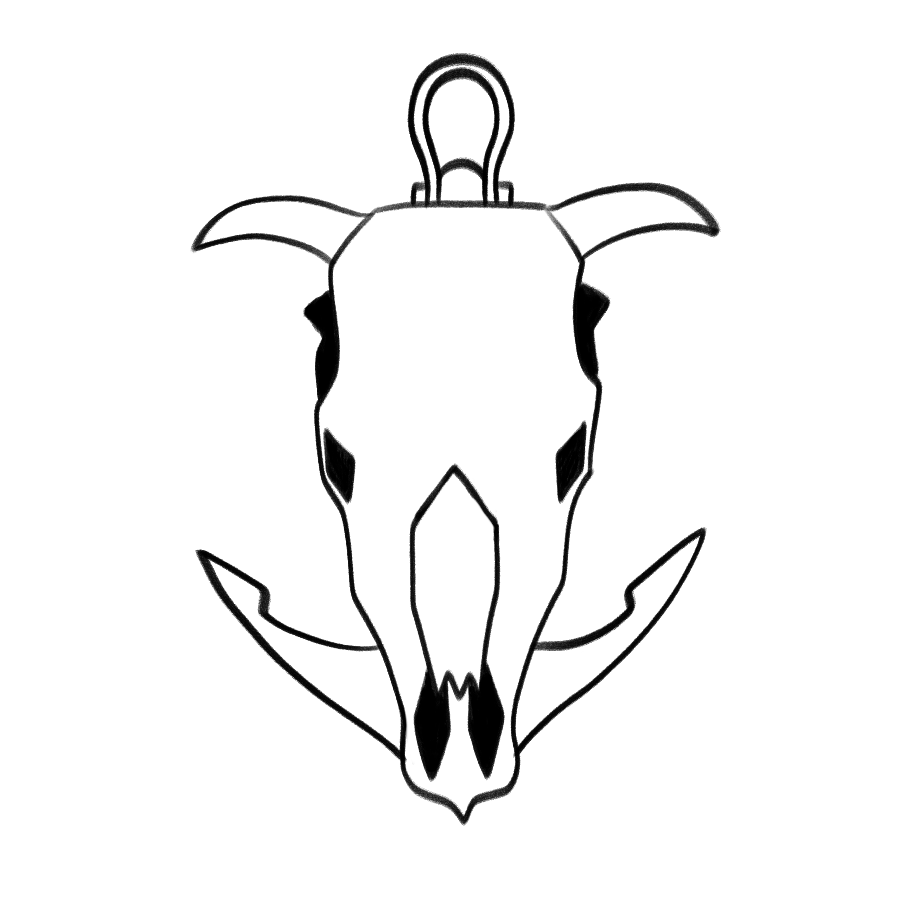
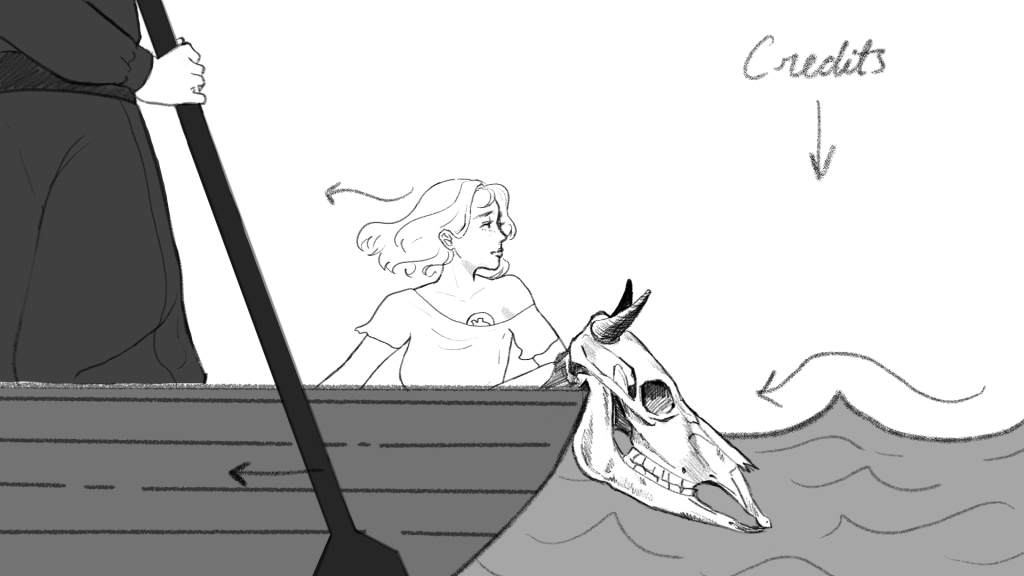
My boat and coin design is drawn from the zodiac myth which recounts the story of the zodiac animals participating in a race. The particular part of the story I drew from was the Ox carried the rat, who disliked water, across the river. I thought this would tie in nicely with the River Styx imagery we already had.
Final film
Image below contains link to our final film ‘Gone to seæ’

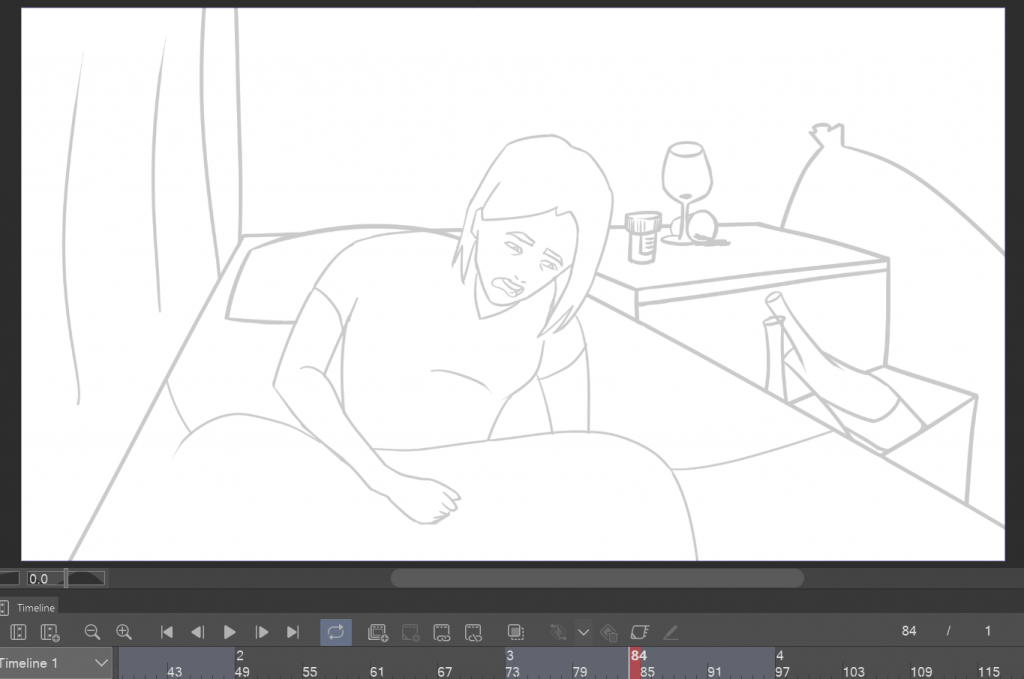
When it came to finally putting the film together, my group decided to split the animatic into equal sections and have each member fully animate their part. After this we assigned each person one of 4 roles: character lineart, background lineart, character colour and background colour.
I was responsible for character lineart. This entailed collecting everyone’s animation and redrawing the characters on a seperate layer above to achieve a consistent looking film. In an effort to not erase anyone’s animating work, I did not add in or take out any frames from files my group members had sent me; I did not want to override the work each member had put into their section.
One thing I found difficult about this process was retaining and replicating movements of members’ characters which had widely different proportions from the set character.
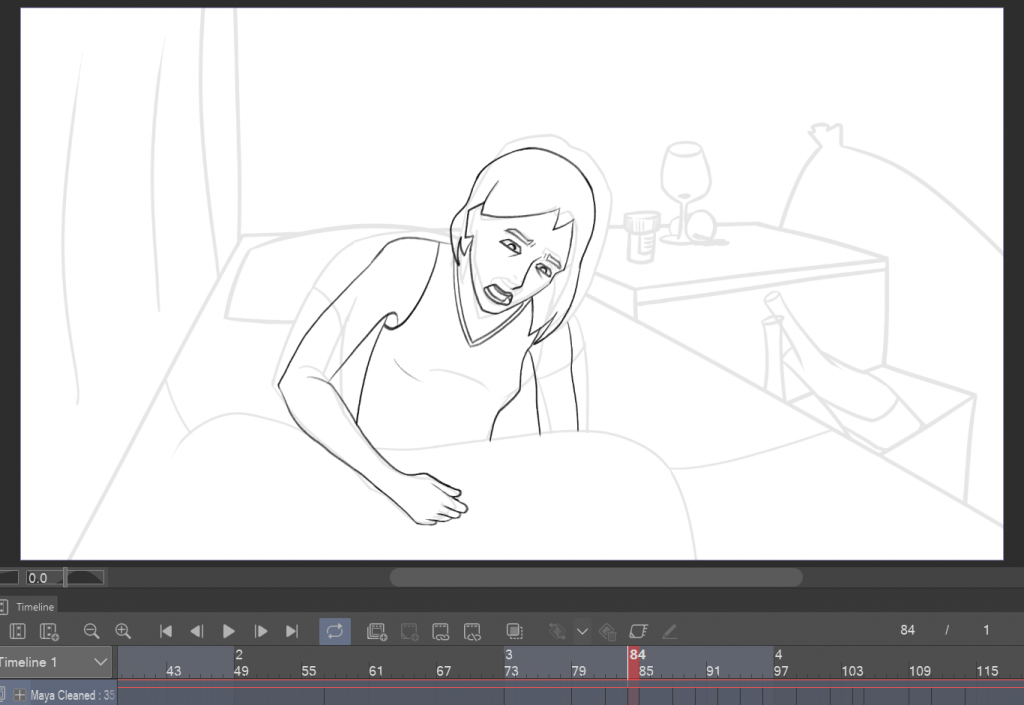
Since each member was working on a different task, we were able to work in tandem allowing production to progress smoothly and quickly. Overall I had a really good experience working on this project, thanks to my teammates and our ability to work well together.
Leave a Reply